
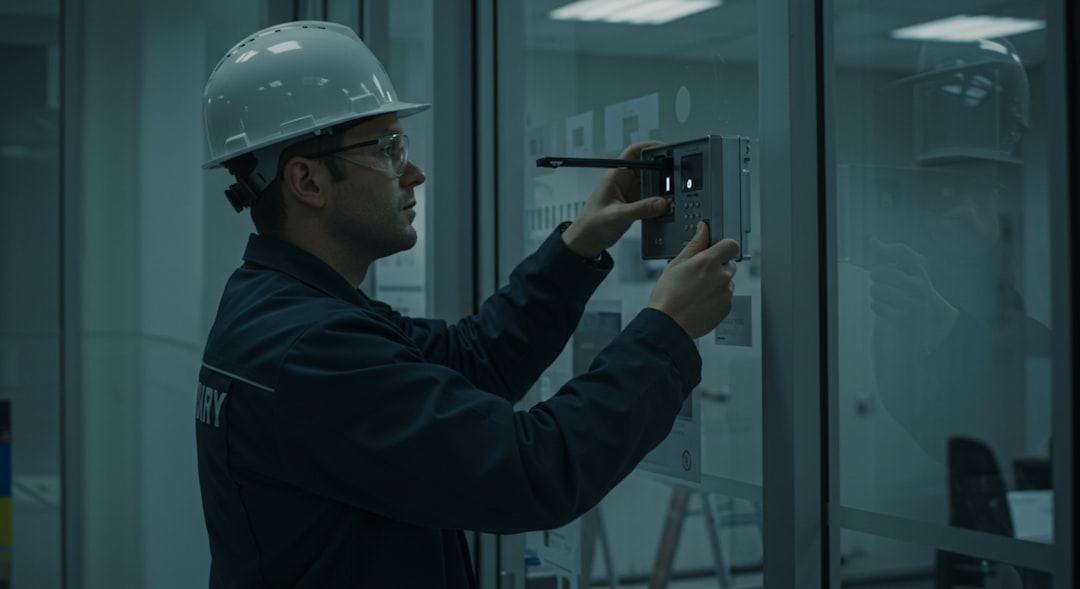
Introduction: Building a Bulletproof Defense Maintenance Strategy
In aerospace, downtime is a risk nobody can afford. Engineers juggle maintenance logs, shift handovers and legacy systems while racing against time. A strong defense maintenance strategy provides the lightweight, agile structure that keeps aircraft skies-ready. It draws on data analysis, historical fixes and human insight to spot wear before it becomes a failure.
Enter AI-powered maintenance intelligence. By capturing the know-how already spread across work orders and team brains, you create a living maintenance manual that grows with every repair. It’s a modern approach to the same core mission the Air Force maintenance managers have perfected over decades: maximise readiness, minimise gaps and predict issues before they ground assets. Experience a defense maintenance strategy powered by iMaintain
The Challenges of Aerospace Maintenance Today
Aircraft maintenance is complex. You need to plan work schedules for jet engines, missile systems and airframes all under strict budgets and safety protocols. Engineers analyse data feeds from sensors, run trend reports, then juggle man-hour costs against operational demand. Despite best efforts, knowledge often lives in notebooks or siloed spreadsheets. As teams change over shifts, crucial insights are lost when someone moves on. That’s where a robust defense maintenance strategy falters: when critical fixes disappear with experience.
When you rely on reactive fixes, repeat faults sneak back on every flight. Unplanned downtime spikes. Performance suffers. Maintenance teams burn precious hours repeating troubleshooting steps instead of driving genuine improvements. It’s a cycle that demands a fresh approach to knowledge retention, situational awareness and proactive decision support.
Why Proactive AI Maintenance Matters in Aerospace
A proactive framework brings prediction into reach without skipping the fundamentals. Instead of overpromising fully automated forecasts, you layer AI on top of what already works: human expertise and historical records. This combination prevents repeat failures and elevates data-driven decisions.
• Historical context at your fingertips: Forget hunting through files or email threads; AI surfaces past fixes according to asset and fault type.
• Trend spotting made easy: Real-time dashboards flag anomalies in engine vibrations or hydraulic pressure so you can act before they cascade.
• Collaborative intelligence: Every repair note, investigation and improvement becomes shared knowledge rather than an individual memory bank.
By centring on actionable insights, a defense maintenance strategy shifts the team from firefighting to foresight. Engineers spend less time digging through archives and more time on what matters: keeping aircraft ready.
Capturing Engineering Knowledge with iMaintain
iMaintain’s core strength lies in turning everyday activity into structured intelligence. Built for in-house maintenance teams, the platform bridges those disconnected pieces you find in work orders, asset logs and system exports. With intuitive workflows on the shop floor, engineers log repairs as they happen. iMaintain then tags root causes, fixes and improvement actions to each asset.
Once that data is in place, it compounds in value. New team members get context for past issues. Supervisors watch metrics climb as repeat failures drop. Reliability leads use insights to plan preventive routines rather than ad hoc fixes. This is how you scale a defense maintenance strategy beyond one or two experts to entire fleets.
Context-Aware Decision Support
Imagine you’ve got a hydraulic pump showing unusual temperature spikes. Instead of guessing, your engineer sees a recommended troubleshooting guide based on three prior events, complete with step-by-step repairs and time estimates. That’s human-centred AI in action: it works with your expertise rather than against it.
Integrating Proactive AI in Maintenance Workflows
Embedding AI into existing processes can feel daunting. iMaintain avoids disruptive transformations; it integrates seamlessly with spreadsheet-driven routines and legacy CMMS tools. Here’s how you adopt a defense maintenance strategy without friction:
- Assess your current data: Identify where maintenance records live.
- Capture baseline knowledge: Use iMaintain to log recent work orders and fixes.
- Roll out guided workflows: Provide engineers with mobile or tablet interfaces that prompt for details and context.
- Monitor progress metrics: Track reduction in repeat failures and improved Mean Time To Repair (MTTR).
- Gradually expand: Extend the system across shifts, sites and asset types.
This phased approach builds trust on the shop floor and yields early wins. Soon you’ll see scheduling become smoother, resource allocation more accurate and emergency firefighting less frequent. Learn how the platform works
Comparing iMaintain to Traditional Solutions
UptimeAI and other predictive analytics tools focus heavily on sensor data and risk scoring. They can spot failure trends but often treat maintenance like a black box. Without structured human insight, you miss the context that prevents repeat faults. iMaintain fills that gap by:
• Bringing together human experience and sensor feeds
• Turning empirical fixes into repeatable, shared procedures
• Offering full visibility for maintenance managers and operations leaders
No more guessing why the same fault keeps happening on that fleet of training jets. iMaintain gives you the backstory immediately.
Mid-Article Checkpoint: Refining Your Defense Maintenance Strategy
At this midpoint, consider how a defence maintenance strategy anchored in shared intelligence could transform your operations. Every repair you log today becomes an asset tomorrow. Refine your defense maintenance strategy with iMaintain
Benefits Beyond Predictive Alerts
Transitioning to an AI-powered defence maintenance strategy delivers measurable outcomes:
- Reduce unplanned downtime by up to 30% through smarter fault prevention. Reduce unplanned downtime
- Cut repeat failures by capturing root causes and fixes in one place.
- Improve MTTR by up to 25% thanks to guided troubleshooting. Improve MTTR
- Preserve engineering wisdom as staff turnover occurs.
- Boost confidence in planning and budgeting with clear maintenance progression metrics.
These gains free up budgets and manpower for meaningful reliability projects instead of firefighting.
Ensuring Workforce Adoption
A defence maintenance strategy only succeeds when teams use it consistently. iMaintain encourages adoption through:
• Intuitive interfaces that minimise data-entry effort
• Contextual prompts that guide engineers through each step
• Progress tracking that rewards teams for reducing repeat work
• Role-based dashboards for supervisors, reliability leaders and operators
• Ongoing support from iMaintain experts who understand real factory environments
When engineers see immediate value in reduced paperwork and faster fixes, they keep using the system and feed it ever more knowledge. Talk to a maintenance expert
Case Study: Proactive AI in Action
A mid-sized aerospace MRO was battling frequent hydraulic failures on a fleet of turboprops. Each fix took two engineers roughly eight hours because they lacked consolidated repair histories. After implementing iMaintain:
- Records for 50 past events were imported in under a day.
- Engineers accessed fault-specific guides on a tablet at the pump station.
- Average repair time dropped from eight hours to just over five.
- Repeat failures fell by 40% in three months.
By linking maintenance data, work orders and team know-how, the MRO transformed into a predictive mind-set while keeping total cost under budget. See real world applications
Testimonials
“iMaintain changed how our team tackles aircraft faults. We used to scramble through old logs; now the platform delivers the right fix at the right time. Downtime is way down.”
— Sarah Mitchell, Maintenance Manager, Horizon Aerospace
“We’re saving 25% on repair times. The AI suggestions guide our engineers step by step without replacing their expertise. It’s the perfect blend.”
— Liam O’Connor, Reliability Engineer, SkyGuard MRO
“As someone responsible for budgets and schedules, I finally have the metrics that matter. We plan maintenance with confidence and reduce emergency work orders.”
— Emily Reed, Operations Lead, SilverWing Aviation
Conclusion: The Future of a Defense Maintenance Strategy
Modern aerospace demands more than reactive fixes. A defence maintenance strategy built on shared intelligence, human-centred AI and gradual adoption sets new standards for reliability. iMaintain empowers engineers, preserves critical knowledge and drives tangible improvements in downtime, MTTR and asset performance. If you’re ready to evolve from patch-and-pray to a proactive maintenance mind-set, start the journey today. Start improving your defense maintenance strategy today