
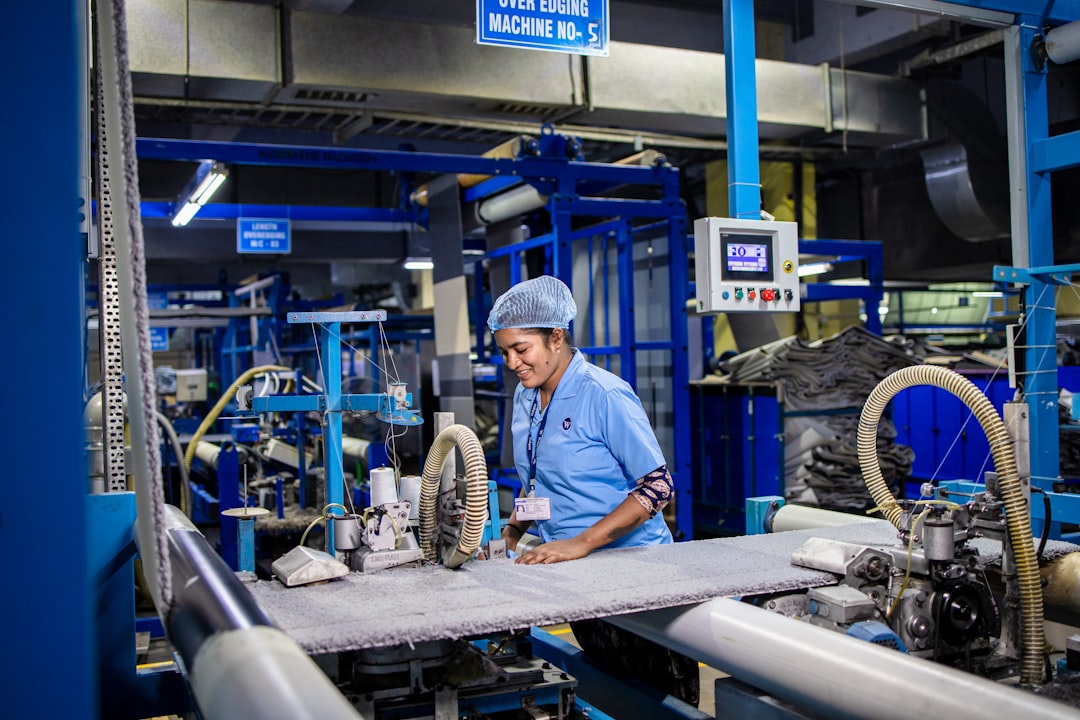
Revolutionise Your Maintenance Continuous Improvement Journey
Imagine a workshop where every fault, fix and insight is captured in a living knowledge base. No more guessing, no more repeated breakdowns. This is the essence of maintenance continuous improvement when you blend AI maintenance intelligence with tried-and-tested Total Productive Maintenance pillars. You get faster fixes, smarter scheduling and a workforce that feels empowered instead of firefighting.
AI-powered maintenance intelligence like iMaintain extracts the best of human experience and machine data, turning everyday work orders into a growing library of best practice. It weaves seamlessly into 5S programmes and Kaizen activities, helping you spot emerging trends and nip issues in the bud. See maintenance continuous improvement with iMaintain — The AI Brain of Manufacturing Maintenance
Understanding Total Productive Maintenance
Total Productive Maintenance (TPM) aims for perfect production: zero breakdowns, zero defects and total operator involvement. It breaks down silos between production and maintenance, creating a culture of shared responsibility. TPM rests on a 5S foundation and eight proactive pillars.
The 5S Foundation
A tidy, organised workshop is the starting point for any maintenance continuous improvement plan. The 5S steps are:
– Sort – remove unnecessary items
– Set in Order – give every tool a home
– Shine – clean and inspect
– Standardise – create simple work instructions
– Sustain – audit and improve regularly
The Eight Pillars of TPM
Each pillar builds resilience and reliability:
- Autonomous Maintenance
Operators own basic upkeep: cleaning, lubrication and checks. - Planned Maintenance
Schedule tasks based on real run-time and wear data. - Quality Maintenance
Embed quality checks and root-cause methods into production. - Focused Improvement (Kaizen)
Cross-functional teams solve recurring losses one by one. - Early Equipment Management
Use frontline insights to refine new machine design. - Training and Education
Equip staff with skills for proactive maintenance and safety. - Safety, Health, Environment
Aim for an accident-free workplace with hazard spotting. - TPM in Administration
Tackle waste and delays in purchase orders, scheduling and reporting.
The Role of AI Maintenance Intelligence in Modern Workshops
Even the best TPM programme can stall if knowledge lives in notebooks, email threads or in the heads of retiring engineers. That’s where an AI maintenance intelligence platform like iMaintain shines. It captures every repair, investigation and improvement action in a shared, searchable layer.
- No more hunting through folders for “Peter’s trick” on that stubborn gearbox.
- Automated suggestions deliver proven fixes when you need them.
- Metrics and dashboards show progress from reactive fire-fighting to strategic reliability.
When AI meets TPM, you get continuous pattern recognition across shifts and sites. Data-driven insights point you to your next Kaizen target, just when performance dips. Ready to see it live? Schedule a demo and let the team show you how it fits your floor.
Mapping AI Intelligence onto TPM Pillars
Here’s how maintenance intelligence plugs into each TPM pillar, accelerating your maintenance continuous improvement loop.
1. Autonomous Maintenance
Operators often spot anomalies first. AI can:
– Highlight unusual vibration or temperature changes
– Surface past fixes and set-point values at the point of need
– Guide step-by-step inspections with digital checklists
You boost operator ownership and cut small stops before they escalate.
2. Planned Maintenance
Stop relying on calendar-based jobs. Instead:
– Predict wear-part life using run-time analytics
– Auto-generate work orders when thresholds approach
– Track component logs and adapt intervals in minutes
This transforms planned maintenance from guesswork into data-backed schedules.
3. Quality Maintenance
Quality defects waste time and materials. AI supports by:
– Spotting early quality shifts with trend analysis
– Linking defects back to maintenance records for root-cause insights
– Prioritising projects that deliver the biggest yield improvements
Quality improvements become part of your daily routine.
4. Focused Improvement
AI highlights the biggest losses automatically. You can:
– Drill down into top loss reports by shift, line or machine
– Pull data into Ishikawa diagrams for structured problem solving
– Measure Kaizen ROI by comparing OEE before and after fixes
It’s like having a digital coach urging you to tackle the next bottleneck.
Learn how iMaintain works to see the workflow in action.
5. Early Equipment Management
Leverage historical maintenance intelligence when installing new assets:
– Review past failure modes to specify more robust components
– Use real-world data to negotiate vendor service agreements
– Simulate maintenance effort and spare-parts needs before go-live
You avoid rookie mistakes and shave weeks off ramp-up time.
6. Training and Education
Mentoring new hires becomes smoother when AI:
– Delivers guided troubleshooting steps
– Pulls in relevant manuals, photos and past tickets
– Measures knowledge gaps and suggests training modules
Engineers learn faster and retain critical know-how.
7. Safety, Health, Environment
Predictive alerts can signal potential hazards:
– Temperature spikes that precede bearing failure
– Lubrication lapses that risk overheating
– Inspection reminders for safety-critical points
A safer factory floor doesn’t slow production, it supports it.
8. TPM in Administration
Administrative tasks fuel TPM too. AI can:
– Automate performance reports and OEE calculations
– Flag overdue work orders or missing logs
– Integrate seamlessly with spreadsheets and legacy CMMS
You reclaim hours every week for meaningful reliability work.
Measuring Success: OEE and Beyond
Overall Equipment Effectiveness is the gold standard for tracking maintenance continuous improvement. AI maintenance intelligence elevates OEE by:
- Capturing every stop, small or large, with close to 100% accuracy
- Calculating performance loss in real time
- Quantifying quality scrap and reduced yield on start-up
Armed with precise data, you set stretch goals using the “Best of the Best” technique and smash them. AI dashboards keep your whole team aligned on progress.
Reduce unplanned downtime by letting data drive your next improvement cycle.
Getting Started with AI-Enabled TPM
Ready to bring AI into your TPM rollout? Here’s a simple path:
- Pilot a single line
Choose equipment with know-how and manageable risk. - Capture baseline data
Perform a 5S blitz, launch autonomous maintenance and log OEE manually or with sensors. - Deploy iMaintain
Integrate historical work orders and live run data. - Review insights weekly
Tackle the top loss, update checklists and refine schedules. - Scale across the plant
Bring new lines online once you see consistent gains.
Need help scoping your pilot? Talk to a maintenance expert and get tailored advice.
Conclusion
Integrating AI maintenance intelligence with Total Productive Maintenance pillars supercharges your maintenance continuous improvement journey. You move from firefighting to foresight, from scattered notes to structured intelligence, from repeat breakdowns to unwavering reliability. That’s the power of a human-centred AI platform designed for real workshop realities.