
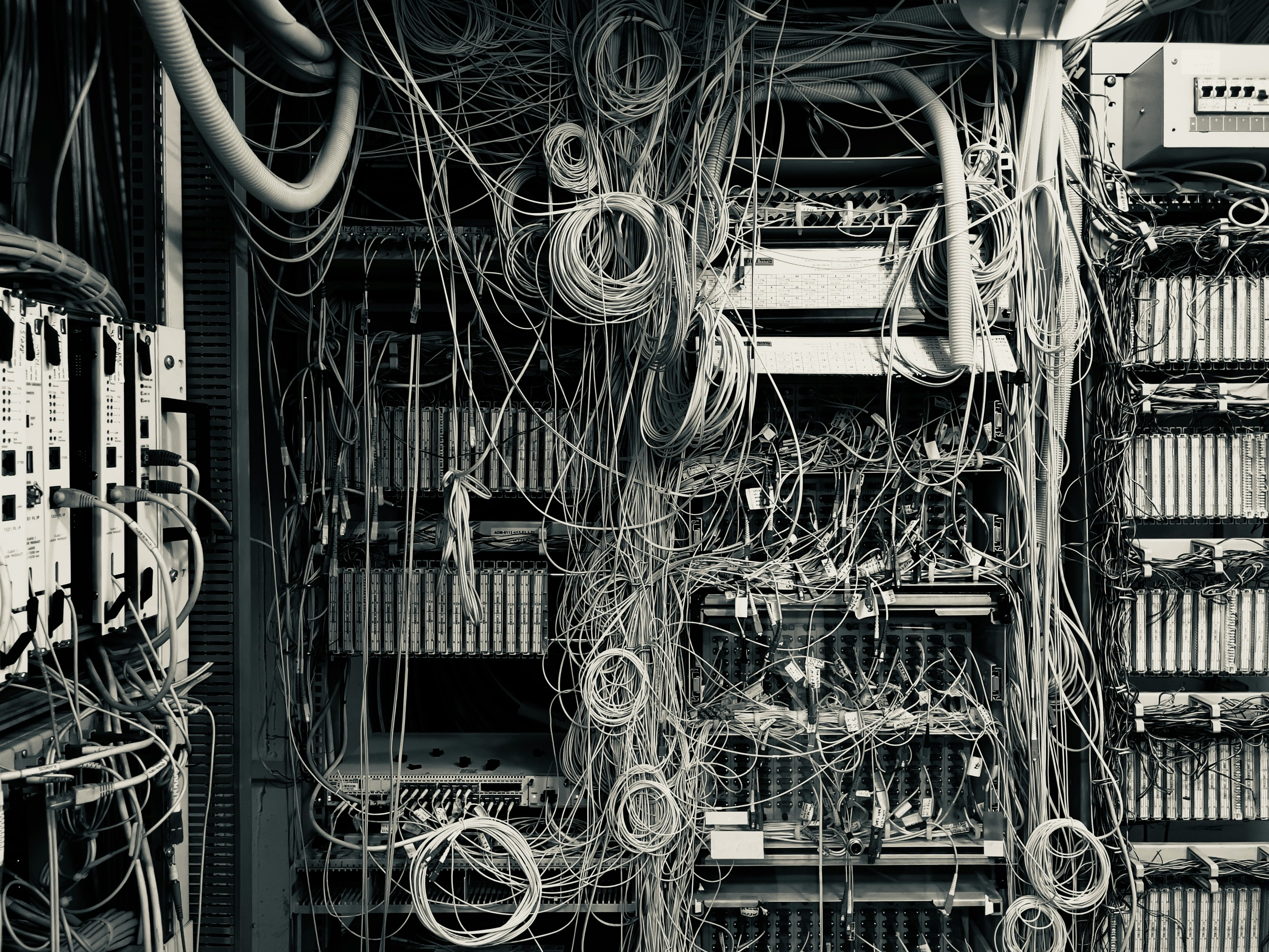
 within an IIoT framework, you can cut through the static, predict failures before they happen and dramatically improve Overall Equipment Effectiveness (OEE). In this post, we’ll show you how iMaintain brings together KDE, powerful sensors and its suite of AI-driven tools—like iMaintain Brain, Asset Hub and AI Insights—to transform your maintenance strategy from reactive to proactive.
Why Machine Learning Maintenance Matters in IIoT
Gone are the days when maintenance teams waited for alarms or visual inspections. With Machine Learning Maintenance, you can:
- Detect subtle anomalies in vibration, temperature or electrical current.
- Predict equipment failures hours or days in advance.
- Schedule repairs at convenient downtimes.
- Reduce unplanned stoppages and maintenance costs.
IIoT devices generate massive data streams—current draw from mixers, temperature readings from pumps, acoustic signals in compressors. But raw data alone won’t save you money. You need analytics that spot hidden patterns. That’s where KDE comes in.
The Role of Tools and Sensors in Early Fault Detection
Choosing the right tools and sensors is step one for any Machine Learning Maintenance initiative:
Vibration Sensors
– Spot bearing wear, misalignment or imbalance early.
– Ideal for high-speed rotating equipment.Current and Power Sensors
– Monitor electrical draw for anomalies—like a stalling motor or brown-outs.
– Integrate seamlessly with MQTT for real-time IIoT data.Temperature Probes
– Detect hotspots in gearboxes or windings.
– Useful in compressors, motors and boilers.Acoustic and Ultrasonic Sensors
– Pinpoint leaks or cavitation in piping and valves.
– Often used in oil, gas and process industries.Pressure and Flow Meters
– Identify blockages or pump issues before they escalate.
– Critical for fluid handling.
Selecting high-quality, representative sensors guarantees that your KDE models are fed with reliable samples—key for accurate distribution estimation.
Understanding Kernel Density Estimation for Predictive Maintenance
Most folks start with histograms to visualise data. But histograms have limits:
- They need large, representative datasets.
- They split data into fixed buckets, losing resolution.
- They struggle in real-time, small-sample contexts.
Kernel Density Estimation solves this. It estimates a smooth probability density function (PDF) from your sample, revealing:
- Fine-grained patterns in sensor readings.
- The real shape of “normal” vs “anomalous” data.
- The sensitivity to noise, missing data or abnormal spikes.
In practice, KDE runs fast—even on edge hardware. It calculates a weighted sum over data points, then smooths the result. With KDE, you can compare live signals against an “ideal” distribution and flag any drift beyond acceptable thresholds.
How iMaintain Integrates KDE into Its AI Platform
iMaintain takes Machine Learning Maintenance to the next level by embedding KDE into a user-friendly IIoT suite. Here’s how our key products work together:
iMaintain Brain for Real-time Anomaly Detection
- Instant Insights: iMaintain Brain ingests sensor streams via MQTT, runs KDE on the fly and computes a goodness-of-fit score.
- Automated Alerts: If the Kolmogorov–Smirnov (K-S) statistic exceeds your threshold, Brain issues an alert: “Pump vibration deviates 12% from baseline.”
- Expert Guidance: Don’t just get a red flag—get recommended actions, such as “Inspect bearing housing” or “Check lubrication schedule.”
Asset Hub and Real-time Operational Visibility
- Live Dashboards: View KDE curves side-by-side for multiple machines—ideal vs actual.
- Historical Context: Drill down into past data and see how distributions evolved over weeks or months.
- Filter and Compare: Compare by sensor type, location or shift to spot recurring issues.
AI Insights for Actionable Maintenance Recommendations
- Predictive Models: Combine KDE outputs with other ML techniques—like time-series forecasting—to predict failure windows.
- Performance Benchmarks: See how each asset measures up against industry averages and your own KPIs.
- Continuous Learning: Insights adapt as you feed more data, refining detection sensitivity and reducing false positives.
Practical Steps to Implement KDE-based Predictive Maintenance with iMaintain
Ready to roll out Machine Learning Maintenance? Follow this roadmap:
Audit Your Assets
– List critical machines and their operating parameters.
– Prioritise those with the highest unplanned downtime costs.Deploy Sensors Strategically
– Start with vibration and current sensors on rotating equipment.
– Expand to temperature and acoustic based on use-case.Connect to Asset Hub
– Use MQTT brokers to route sensor feeds securely.
– Ensure data integrity with time-stamped readings.Configure KDE Models
– Define “ideal” distribution for each sensor type during normal operation.
– Set bandwidth (h) to balance sensitivity vs noise tolerance.Set K-S Test Thresholds
– Choose a K-S statistic cutoff, e.g. D > 0.1 triggers “degraded” alert.
– Optionally adjust p-value for more stringent conditions.Monitor and Iterate
– Use iMaintain Brain to validate alerts.
– Tweak thresholds and sensor placement as needed.
– Document lessons learned in the Manager Portal for your team.
Benefits of KDE-driven Predictive Maintenance
Implementing Machine Learning Maintenance via KDE and iMaintain yields tangible gains:
Up to 30% Reduction in Downtime
Catch faults before they halt production.10–20% Boost in OEE
Optimise run rates and minimise cycle losses.Lower Maintenance Costs
Shift from reactive fixes to planned, cost-effective servicing.Enhanced Safety and Compliance
Identify dangerous conditions early—prevent accidents and fines.
Case Example: Manufacturing Company Boosting Uptime
Take a medium-sized food-processing plant struggling with mixer motor failures. They:
- Installed current and vibration sensors on each mixer.
- Fed data into iMaintain’s Asset Hub.
- Used KDE to model baseline current draw.
- Detected drift during the second shift—well before alarms sounded.
- Saved over £50,000 in unplanned maintenance within 3 months.
They now rely on iMaintain Brain for daily health checks and use AI Insights to review trends in their weekly operations meetings.
Best Practices and Tips
To maximise your Machine Learning Maintenance ROI:
- Maintain Data Quality: Calibrate sensors regularly. Remove outliers before model training.
- Engage Your Team: Use the Manager Portal to share dashboards and insights. Encourage hands-on sessions.
- Review Periodically: Revisit KDE parameters quarterly—equipment wear patterns evolve.
- Start Small, Scale Fast: Pilot on 1–2 lines, then roll out across all critical assets.
- Leverage Expert Support: Tap into iMaintain’s case studies and support forum for proven strategies.
Conclusion
Kernel Density Estimation is a powerful yet accessible tool for Machine Learning Maintenance in IIoT environments. By weaving KDE into iMaintain’s integrated suite—iMaintain Brain, Asset Hub and AI Insights—you gain predictive power, real-time visibility and expert guidance all in one place. The result? Less downtime, higher OEE and a maintenance team that finally stays one step ahead of failures.
Ready to take control of your maintenance strategy? Discover how iMaintain can transform your operations today.
Book a Demo with iMaintain
Visit https://imaintain.uk/ for more details and get started with smarter predictive maintenance!