
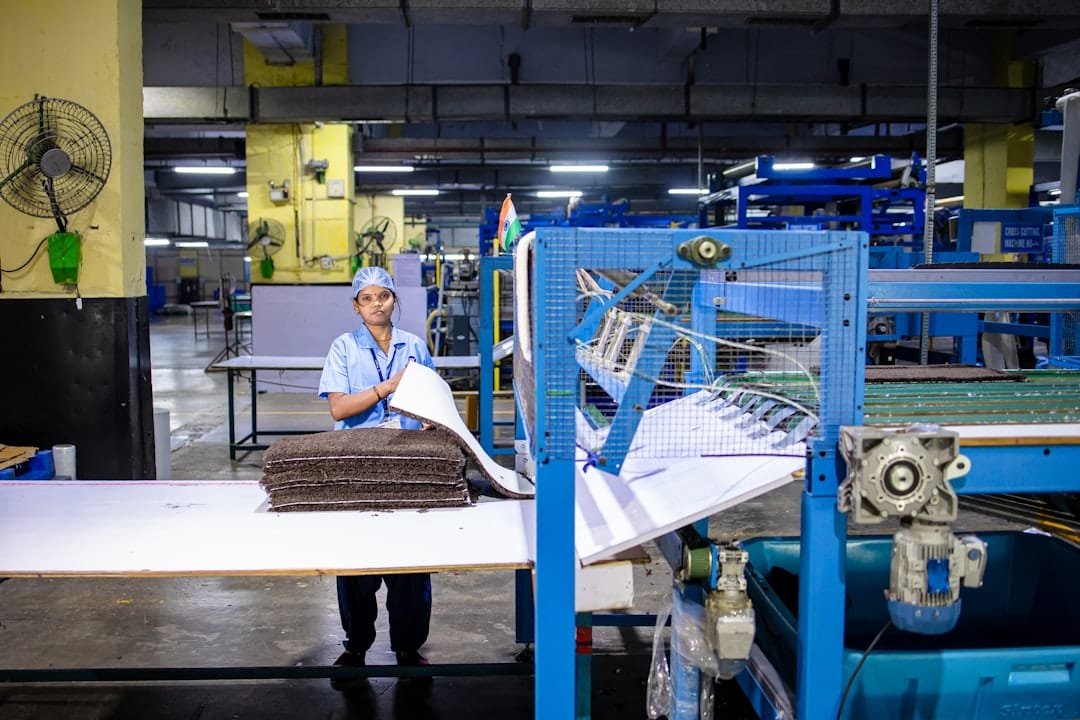
To streamline work orders effectively in modern manufacturing, maintenance teams need an intelligent operational layer that translates fault logs, technician observations, and machine histories into actionable troubleshooting steps. Rather than burdening engineers with rigid administrative forms or forcing organisations to rip and replace their existing CMMS, purpose-built maintenance AI connects historical repairs, manuals, and tribal knowledge at the point of need. This targeted approach cuts Mean Time to Repair (MTTR), prevents recurring breakdowns, and keeps production lines running.
Traditional maintenance request logging is broken. When a machine trips on the factory floor, an operator logs a ticket such as “conveyor stopped” or “machine jammed”. That vague description gets dumped into a queue. An engineer walks over, performs basic diagnostics from scratch, hunts down a manual or phones a senior colleague, fixes the symptom, and closes the ticket with a two-word note like “cleared jam”. The work order cycle repeats tomorrow, next week, and next month. Sound familiar? Let us look at how you can transform that reactive treadmill into a reliable, intelligent operational loop.
Rethinking Request Handling: Why Generic Chatbots and Basic CMMS Fail
Every maintenance manager wants a smooth ticketing workflow. For years, vendors promised that customer-service style chatbots or self-service CMMS portals would solve the problem. The idea sounded simple enough: give operators a text interface to log faults, let a script route the request, and wait for the problem to resolve itself.
In reality, generic chatbots and basic ticketing portals fail manufacturing teams. Industrial equipment does not behave like an e-commerce return request. When a high-speed packaging machine trips, an operator rarely knows whether the culprit is a failing proximity sensor, a pneumatic pressure drop, or a worn drive belt. If an automated script asks them twenty generic questions, the operator either gives up, types nonsense to bypass the form, or calls the engineering workshop directly. Administrative overhead spikes, frontline engineers receive bad data, and the line stays down longer.
If you want to genuinely streamline work orders across your plant, you cannot simply put a conversational skin over a clunky form. You need an intelligent system that understands plant context, historical failure modes, and technical documentation. It must help the engineer on the shop floor diagnose the fault rapidly instead of simply filing an electronic piece of paper. Explore iMaintain RMP to see how a Reliability Management Platform connects maintenance data, technical information, and engineer knowledge to support better reliability decisions without adding administrative friction.
The Anatomy of an Efficient, AI-Assisted Work Order Workflow
What does a truly streamlined maintenance workflow look like on a busy factory floor? It bridges the gap between the initial fault alert, the engineer’s diagnostic process, and long-term reliability records. Here is how modern manufacturing teams structure this process:
1. Rapid, Contextual Ticket Initiation
When an issue occurs, the goal is capturing the right diagnostic context instantly. Rather than demanding exhaustive form-filling, the system identifies the asset, checks whether related alarms fired recently, and captures the core symptom. By using smart templates or voice-to-text logging, operators and technicians record what happened in seconds.
2. Immediate Diagnostic Retrieval
Instead of treating every breakdown as a mystery, the platform compares the current fault against thousands of past records. Has this drive tripped under heavy load before? Did shift B solve an identical fault last Tuesday by swapping an auxiliary relay? The engineer sees validated historical fixes immediately on their mobile device or workstation, cutting diagnostic time in half.
3. Smart Document and Manual Assistance
Frontline engineers do not have time to flip through a 400-page PDF manual while line management stands behind them asking for an estimated time to return to service. An engineering-focused AI platform pulls the exact wiring diagram, pneumatic schematic, or fault code procedure straight to the engineer’s screen.
4. Frictionless Closure and Knowledge Retention
Closing a ticket should not feel like tax accounting. When the repair is finished, the engineer captures what actually fixed the problem, records any parts used, and completes the work. Where supported, the intelligence platform synchronises with your existing CMMS to close the underlying work order automatically. The fix becomes part of your factory’s collective brain for the next shift.
For a deeper look into connecting diagnostics with live factory environments, read our guide on AI troubleshooting answers for maintenance.
Why Your Existing CMMS Is Not Enough on Its Own
Most manufacturing plants with over 200 employees already have a Computerised Maintenance Management System (CMMS) or Enterprise Asset Management (EAM) platform. You might be running SAP, Maximo, MaintainX, or another established tool. These platforms are crucial systems of record. They track asset registers, log planned preventative maintenance schedules, manage spare parts inventory, and store audit trails for compliance.
However, there is an uncomfortable truth that every maintenance engineer knows: CMMS platforms are terrible search engines during an active breakdown.
A CMMS stores vast amounts of data, but it traps that data in silos. Finding what cured an intermittent sensor fault three years ago across five hundred closed work orders requires expert searching, perfect keyword recall, and endless scrolling. When production stops and downtime costs reach hundreds of pounds per minute, nobody has time for that. Engineers rely on memory or ring the veteran technician who has worked on the site for thirty years.
This is why forward-thinking plants do not replace their CMMS; they complement it. An intelligence layer like iMaintain RMP sits on top of your existing CMMS. It pulls work-order histories, technical manuals, and shift logs into a unified, searchable troubleshooting platform. Your CMMS remains your system of record for governance and scheduling, while your engineers gain an interactive reliability partner that helps them solve problems immediately.
Want to see how this fits into your current architecture? Check out our breakdown of achieving true enterprise asset reliability with iMaintain and your existing CMMS.
What Real Engineering Leaders Say
Don’t just take our word for it. Manufacturing and engineering leaders across demanding production environments use iMaintain to streamline work orders, accelerate troubleshooting, and capture frontline knowledge:
“iMaintain is far superior to other systems we’ve seen on the market. What really sets it apart is the way it uses AI to assist engineers and support root cause analysis.”
— Chris Cole, Maintenance Manager, The Senator Group“The product sells itself and the price point sits easy in anyone’s maintenance budget.”
— Chris Cole, Maintenance Manager, The Senator Group“I am excited to see how iMaintain can help our technicians get the information they need faster, support us in root cause analysis, and also help improve our PM’s by recognising trends in repeat failures.”
— James Hunter, Head of Engineering, Senstronics
These teams understand that real maintenance efficiency comes from supporting frontline engineers with practical answers, not burying them under administrative software.
Practical Steps to Streamline Work Orders on the Shop Floor
If you want to move away from chaotic shift handovers, slow troubleshooting, and endless repeat breakdowns, follow these practical steps to modernise your work order management:
Step 1: Standardise Without Complicating
Avoid 50-field work order forms that nobody fills in properly. Keep the required fields minimal: Asset ID, primary symptom, priority level, and an open text or audio field for engineer notes. Standardise the high-level classifications while letting AI parse the nuances of the text.
Step 2: Unify Your Maintenance Documentation
Gather your machine manuals, standard operating procedures (SOPs), electrical schematics, and supplier bulletins out of ring binders and dusty shared network drives. Feeding these documents into an intelligent platform allows engineers to query them naturally using plain English.
Step 3: Connect Tribal Knowledge to Closed Work Orders
Your most experienced technicians hold decades of diagnostic intuition in their heads. When they retire, that knowledge walks out the door. Encourage senior engineers to record brief voice notes or practical observations when closing complex jobs. An intelligent reliability platform extracts the core fix from those notes and links it permanently to the asset’s history.
To discover practical techniques for securing this insight, explore our article on maintenance knowledge retention and stopping tribal expertise leaving your plant.
Step 4: Automate Shift Handovers
Shift change is often where communication breaks down. Instead of scribbling notes in a physical logbook or sending fragmented WhatsApp messages, use automated shift summaries. When your work order data is structured cleanly, your system can automatically compile open work orders, ongoing diagnostic checks, and parts awaited, giving the incoming shift total visibility.
Addressing the Common Pitfalls of Maintenance Automation
When introducing AI or automation to maintenance workflows, engineering teams frequently encounter three main hurdles. Here is how to navigate them:
1. Frontline Scepticism
Maintenance engineers are naturally pragmatic. They have seen plenty of corporate IT initiatives that promised the earth but only resulted in clunky tablets and extra admin. If an AI tool feels like an executive surveillance monitor or a glorified survey, technicians will reject it. The tool must provide obvious, immediate value to the engineer at 2:00 AM on a Sunday. When an engineer types in a symptom and gets the exact wiring diagram and previous fix within five seconds, adoption follows naturally.
2. Messy Historical Data
Many maintenance managers worry: “Our CMMS data from the last five years is full of typos, half-finished descriptions, and vague notes. How can an AI make sense of that?” Modern industrial AI platforms do not require pristine datasets to deliver value. Advanced natural language processing connects patterns across informal engineer shorthand, part numbers, and failure symptoms, grouping related events together even when the spelling or phrasing varies.
3. Rip-and-Replace Fatigue
Replacing a company-wide CMMS or EAM system takes months, costs tens of thousands of pounds, and causes immense operational disruption. Demanding that your engineering team abandon their existing software is often a non-starter. Look for solutions like iMaintain RMP that work alongside your current setup, acting as an intelligence booster rather than an unwanted replacement.
Frequently Asked Questions (FAQ)
How does AI streamline work orders without creating extra admin for technicians?
Purpose-built maintenance AI reduces administrative friction by replacing complex drop-down menus with natural language processing, audio dictation, and automated data tagging. Instead of manually searching through hundreds of old records or typing out lengthy reports, engineers get instant diagnostic suggestions based on historical work orders and manuals, and they can close jobs with simple, voice-transcribed summaries.
Can we keep our existing CMMS if we implement an AI reliability platform?
Yes. A purpose-built Reliability Management Platform like iMaintain RMP is designed specifically to integrate with and complement your existing CMMS or EAM. Your CMMS remains the official system of record for compliance, scheduled servicing, and asset registers, while the AI layer provides frontline diagnostic assistance, repeat fault analysis, and faster knowledge retrieval.
What if our plant has older machinery without digital sensors or IoT telemetry?
You do not need expensive vibration sensors or IoT telemetry on every asset to benefit from AI. A vast amount of operational intelligence already exists in your past work order logs, equipment manuals, and the daily experience of your engineering team. AI can unlock and organise this textual and historical data immediately, delivering faster troubleshooting on legacy machinery as well as modern assets.
How quickly can engineers find previous fixes during an unplanned breakdown?
With an integrated reliability platform, engineers can query fault symptoms or error codes on their mobile phone or tablet and see relevant historical fixes, wiring schematics, and suggested actions within seconds. This dramatically shortens the initial diagnostic phase, which is typically the most time-consuming part of resolving unplanned downtime.
Transform Your Maintenance Workflow Today
Streamlining work orders is not about logging tickets faster; it is about resolving equipment failures quicker, empowering technicians with immediate context, and preventing the same breakdown from repeating next week. By combining your existing maintenance records with intelligent, plant-aware reliability software, you turn messy operational data into your plant’s greatest asset.
Ready to see how intelligent troubleshooting can reduce downtime and simplify daily routines across your facility? Book a demo to explore how iMaintain works with your existing setup and systems.