
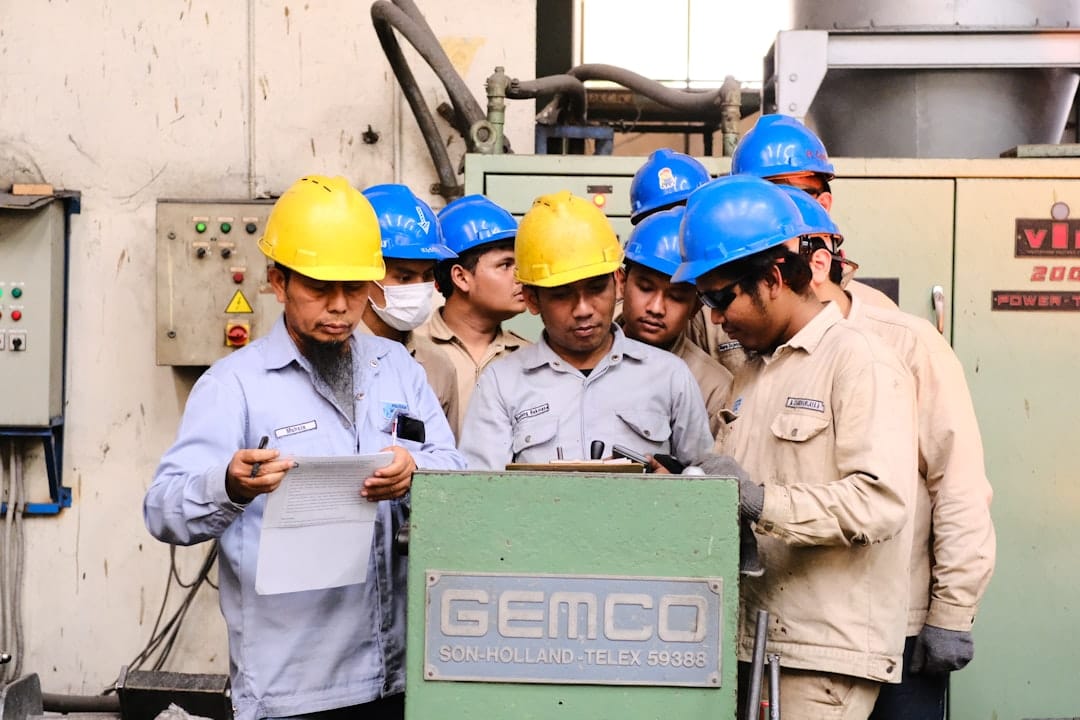
Moving from reactive to preventive maintenance requires shifting your engineering workflow from emergency breakdown response to scheduled, condition-based, and intelligence-driven asset care. For manufacturing facilities and industrial operations, this transition cuts unplanned downtime by up to 30%, reduces secondary asset damage, and eliminates frantic shifts spent chasing phantom faults.
Most maintenance teams already recognise that running to failure destroys maintenance budgets, yet breaking out of the reactive firefighting trap remains a significant operational hurdle. True reliability is rarely achieved by simply scheduling more calendar inspections; instead, it demands connecting frontline technician insight with historical CMMS records to eliminate repeat failures.
Escaping the Firefighting Trap: What Shifts When You Go Proactive?
Every maintenance engineer knows the feeling of walking onto the plant floor only to be greeted by three flashing red beacons, a conveyor blockage, and an operations manager asking for an immediate estimated time to repair. When organisations live in a state of perpetual reactive maintenance, schedules collapse, spare parts budgets blow out through emergency courier orders, and technician morale plummets. Shifting from reactive to preventive maintenance fundamentally changes this daily rhythm, turning chaotic shifts into predictable, planned interventions where work orders are completed before machines grind to a halt.
Making this transition work in the real world does not mean you have to rip out your current systems or double your headcount overnight. Instead, it involves introducing targeted intelligence that spots recurring failure modes, connects past fixes to active faults, and guides engineers directly to root causes. Maintenance teams can supercharge their reliability efforts by evaluating how dedicated solutions bridge the gap: Explore iMaintain RMP to see how a Reliability Management Platform connects maintenance data, technical information, and engineer know-how.
The Real Cost of Reactive Maintenance on the Factory Floor
Why is reactive maintenance so damaging to industrial plants? On paper, some finance departments mistakenly view reactive maintenance as economical because you only pay when an asset actually stops working. In practice, the total cost of unplanned downtime dwarfs scheduled servicing costs every single time.
When a machine fails under load, several compounding costs hit simultaneously:
- Secondary Equipment Damage: A worn bearing that could have been replaced during a planned 20-minute window can seize, bend the drive shaft, burn out the motor windings, and destroy the gearbox.
- Emergency Labour and Overtime: Technicians are forced to work unsociable hours on call-out rates, often improvising temporary patches under extreme operational pressure.
- Scrapped Product and Quality Defects: Abrupt line stops often cause thermal degradation of raw materials, packaging pile-ups, or uncalibrated tooling runs that must be binned.
- Expedited Freight on Spare Parts: Paying four times the component value just to get a replacement seal or PLC module delivered by express courier overnight.
- Erosion of Frontline Knowledge: Senior engineers spend all their time putting out literal and metaphorical fires, leaving zero time to train apprentices or document what they learned.
Understanding these hidden drivers is crucial for building a business case for reliability. For a deeper breakdown of these financial leaks, read our guide on uncovering the true cost of downtime.
Reactive vs. Preventive vs. Predictive Maintenance: What Is the Difference?
Before overhauling work orders, it helps to be clear about the terminology. Maintenance strategies exist on an operational maturity spectrum:
Reactive Maintenance (Run-to-Failure)
Repairs occur only after an asset breaks down or stops performing its intended function. While acceptable for non-critical, easily replaceable assets (such as standard lightbulbs or redundant auxiliary pumps), applying reactive maintenance to critical production assets leads to unpredictable line stoppages and astronomical repair bills.
Preventive Maintenance (Time- or Usage-Based)
Maintenance tasks are performed at predetermined calendar intervals or after a specific number of operating hours, cycles, or miles. Tasks typically include lubricating bearings, tensioning belts, replacing filter elements, and checking calibrations. While far superior to reactive firefighting, basic preventive maintenance has a major flaw: performing tasks too early wastes good parts, while performing them too late allows catastrophic failures to slip through.
Predictive and Reliability-Driven Maintenance
This approach uses condition-monitoring sensors, operational telematics, and historical maintenance intelligence to identify subtle anomalies before failure occurs. Rather than replacing a component simply because the calendar says it is Tuesday, predictive strategies evaluate real operating conditions, vibration profiles, thermal signatures, and historical fault logs to prescribe precise interventions.
5 Steps to Move from Reactive to Preventive Maintenance
Moving an entire facility from reactive firefighting to structured prevention does not happen with a flick of a switch. It requires a deliberate, manageable methodology.
1. Perform an Asset Criticality Assessment
Do not try to make every machine preventive at once. You will overwhelm your engineering team with work orders. Start by categorising plant equipment into three distinct tiers:
- Tier 1 (Critical): Single points of failure where a breakdown halts the entire line or poses safety risks. These receive immediate preventive and reliability focus.
- Tier 2 (Essential): Assets with partial redundancy or downstream buffering that cause significant operational slowdown if offline for more than four hours.
- Tier 3 (Non-Critical): Ancillary equipment with zero direct impact on production throughput. These can safely remain on run-to-failure or basic periodic visual checks.
2. Audit and Standardise Your Maintenance History
Look closely at your last twelve months of work orders. Are they filled with vague notes like “fixed line 2” or “reset sensor”? Fragmented records hide the true failure patterns. You need clean, structured records that capture the exact symptoms, root causes, and successful fixes. When technicians can reference previous repairs, mean time to repair drops dramatically. Explore how standardising factory maintenance workflows helps prevent inconsistent fixes.
3. Transition from Calendar Schedules to Asset Run-Hours
Static monthly inspections frequently cause over-maintenance on idling lines and under-maintenance on lines running three shifts back-to-back. Integrate runtime counters and PLC cycle triggers into your planning so that service intervals reflect real wear and tear.
4. Address the Chronic, Repeat Faults First
Every manufacturing floor has “problem child” machines that trigger nuisance alarms multiple times a week. Engineers reset them, tweak an optical sensor, clear a jam, and walk away. Over a month, these micro-stoppages add up to dozens of lost production hours. Focus your initial preventive push on performing structured root cause analysis on these repeat culprits.
5. Build an Intelligence Layer Over Your Existing Systems
One of the biggest mistakes organisations make is assuming that moving to proactive maintenance requires buying a massive, expensive new CMMS and starting from scratch. Ripping out legacy software frustrates engineers, destroys years of historical asset data, and halts operations. The smarter move is keeping your existing CMMS as the administrative system of record while deploying a purpose-built reliability layer that feeds historical context, manuals, and previous fixes directly to the frontline technician.
How AI and Reliability Platforms Bridge the Maintenance Skills Gap
Even with the best preventive intentions, maintenance teams face an unprecedented industry challenge: the retirement of experienced engineers and a growing shortage of skilled technical labour. When a veteran technician who has looked after a packaging line for twenty-five years walks out the door, their knowledge often leaves with them.
Traditional preventive maintenance programs struggle here because standard operating procedures rarely capture tribal know-how. When an apprentice technician is sent to inspect a hydraulic press showing an intermittent pressure drop, a generic paper checklist will not tell them that a specific manifold valve tends to bind when ambient temperatures rise above 28 degrees.
This is where manufacturing-focused AI products and Reliability Management Platforms make a tangible difference. Rather than using generic, ungrounded chatbots that hallucinate technical specifications, specialised platforms aggregate past CMMS work orders, equipment manuals, engineer shift handover logs, and field modifications. When an engineer approaches an asset, the system surfaces contextual troubleshooting advice grounded in that factory’s real historical data.
To discover how modern plants connect existing records to frontline execution, read about why your CMMS needs an intelligence layer.
What Industry Leaders Say About Smarter Maintenance
Reliability leaders across demanding manufacturing sectors are seeing immediate results by coupling their current maintenance workflows with contextual AI and structured reliability tools:
“iMaintain is far superior to other systems we’ve seen on the market. What really sets it apart is the way it uses AI to assist engineers and support root cause analysis.”
Chris Cole, Maintenance Manager, The Senator Group
“The product sells itself and the price point sits easy in anyone’s maintenance budget.”
Chris Cole, Maintenance Manager, The Senator Group
“I am excited to see how iMaintain can help our technicians get the information they need faster, support us in root cause analysis, and also help improve our PM’s by recognising trends in repeat failures.”
James Hunter, Head of Engineering, Senstronics
Practical Challenges When Moving Away from Reactive Maintenance
Transitioning to proactive workflows is not without friction. Engineering managers often face three primary obstacles during rollout:
1. Resistance from Frontline Engineers
If technicians feel that preventive routines simply mean burying them in repetitive, tick-box administrative paperwork on clunky digital forms, they will push back. The solution is minimising administrative friction. Tools must allow engineers to quickly find past fixes, log work without excessive typing, and close out work orders seamlessly.
2. Balancing Backlog with Urgent Repairs
During the first two to three months of transitioning, you must still manage breakdown calls while simultaneously carrying out scheduled preventive tasks. This requires clear prioritization: protect dedicated preventive maintenance hours so technicians are not continuously pulled off scheduled inspections to fight preventable fires.
3. CMMS Integration Hurdles
Many engineering managers worry that introducing proactive intelligence tools will disrupt their existing work order database. That is why purpose-built tools like iMaintain RMP are engineered to sit directly alongside your existing CMMS or EAM. The CMMS manages planned work orders and asset registers, while the Reliability Management Platform provides the intelligence layer for rapid fault diagnosis, knowledge capture, and repeat-failure prevention.
Frequently Asked Questions
How long does it take to shift from reactive to preventive maintenance?
Most industrial facilities see initial gains within 60 to 90 days by focusing exclusively on their top five critical assets and resolving chronic repeat faults. A complete operational shift across an entire plant typically takes six to twelve months of disciplined work order tracking, asset criticality ranking, and knowledge standardisation.
Does preventive maintenance eliminate all unexpected breakdowns?
No maintenance strategy can eliminate every equipment failure. Mechanical parts suffer unforeseen fatigue, raw materials vary in consistency, and human error occurs. However, moving to preventive and reliability-led maintenance typically reduces unplanned stoppages by 50% to 70%, ensuring remaining failures are minor and easily rectified rather than catastrophic.
Do I need to replace my existing CMMS to become proactive?
No. In fact, replacing a functional CMMS often sets your reliability journey back by months. Your CMMS works well as a system of record for assets, compliance, and work orders. Adding an intelligence and reliability layer like iMaintain RMP allows you to extract actionable troubleshooting insights from your existing records without the operational disruption of a software overhaul.
What is the ideal balance between preventive and reactive work orders?
World-class industrial maintenance benchmarks generally aim for an 80/20 ratio: 80% planned, preventive, or proactive maintenance, and no more than 20% unscheduled breakdown work. If your plant is currently running at 60% or higher reactive work, prioritising asset criticality and repeat-fault analysis will yield immediate productivity gains.
Take Control of Your Maintenance Reliability
Staying trapped in reactive firefighting drains your engineering budget, burns out your technicians, and disrupts plant output. Transitioning to structured preventive maintenance does not require complex IT projects or replacing the systems your team already knows.
By uniting historical maintenance logs, asset manuals, and technician expertise in an accessible platform, your engineers can stop repeating the same troubleshooting steps and start eliminating recurring breakdowns for good.
Ready to see how intelligent data access transforms frontline reliability? Book a demo to explore how iMaintain works with your existing maintenance setup and helps your engineering team solve equipment problems faster.